
6 Ways Meditation and Yoga Actually Change Your Everyday Life
By Jadeverett MayhornUpdated 3 min readSpiritual Growth
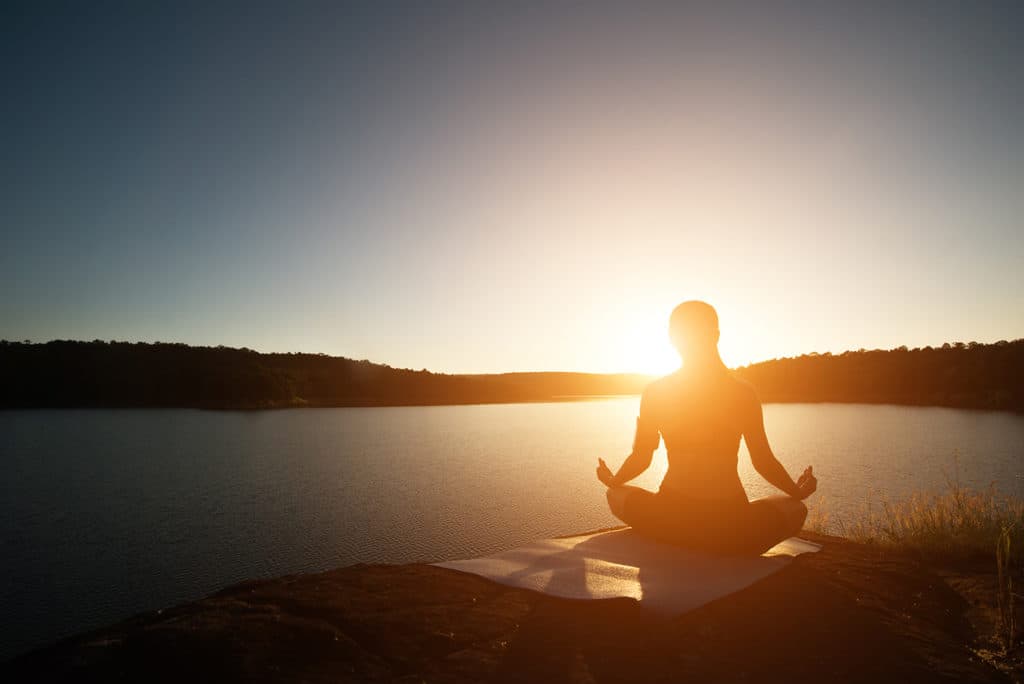
The benefit of meditation and yoga isn't confined to the hour spent actually practicing. Done consistently, over months and years, both practices change how you move through everything else, the meeting, the hard conversation, the moment you almost lose your temper at someone you love.
Most people evaluate a practice like this by how it feels during the session itself, calm, stretched, temporarily relaxed. The more meaningful measure is what carries over into the rest of the day, and the rest of the week, well after the session itself has ended.
1. A Longer Pause Between Trigger and Reaction
Consistent practice widens the gap between something happening and you responding to it, a gap that used to be nearly instantaneous and gradually becomes long enough to actually notice and choose within. That gap is where every good decision under pressure actually gets made, and it's directly trainable through consistent practice.
2. A Body That Carries Less Stored Tension
Stress lives physically, in the shoulders, the jaw, the chest, accumulating silently over weeks of unaddressed tension. Yoga specifically works that tension out at the physical level, which changes your emotional baseline more than most people expect from what looks, on the surface, like a purely physical practice.
3. Better Sleep, Which Changes Everything Else
A calmer nervous system before bed translates directly into deeper, more restorative sleep, and almost every other benefit on this list is considerably easier to access when you're not chronically sleep-deprived, since sleep deprivation itself degrades exactly the capacities these practices are trying to build.
4. Sharper Attention
Meditation is, functionally, repeated practice at noticing when your attention has wandered and bringing it back, over and over, hundreds of times in a single session. That's a directly trainable skill, and it transfers noticeably into sharper focus at work and more genuine presence in relationships outside the practice itself.
5. A Different Relationship With Discomfort
Both practices ask you to stay present with physical or mental discomfort without immediately escaping it, holding a challenging pose, sitting with a restless mind rather than reaching for a distraction. That tolerance generalizes over time, discomfort in a hard conversation becomes something you can stay with a little longer before automatically retreating from it.
6. A Baseline You Can Return To
The real value shows up on the hard days, when practice gives you an established baseline of calm to return to instead of starting from zero every single time life gets genuinely difficult. That baseline doesn't develop from a single session. It's built cumulatively, through consistent return to the practice over an extended period.
The mat and the cushion aren't the point. What you carry off them into the rest of your day is.
Starting Without Overcomplicating It
Neither practice requires expensive equipment, a special studio, or years of prior experience to begin producing real benefit. A few minutes of seated stillness, or a handful of basic stretches held with attention, is enough to start, and waiting for ideal conditions, the right app, the right class schedule, the right mat, tends to delay starting indefinitely.
The specific style or method matters considerably less in the beginning than simply starting consistently and paying attention to what your own body and mind actually respond to, adjusting from there based on real experience rather than theory.
Why Consistency Beats Intensity Here Too
A daily ten-minute practice, sustained for a year, produces more of these six benefits than an occasional ninety-minute session attended once a month with long gaps in between. The nervous system responds to repetition and consistency more reliably than to occasional intensity, which is part of why a modest, sustainable practice tends to outperform an ambitious one that quietly gets abandoned within a few weeks.
Combining Both for a Compounding Effect
Meditation and yoga reinforce each other when practiced together, the stillness of meditation making the body more receptive to yoga's physical release, and the physical release of yoga making it easier to sit still afterward without as much restless tension competing for attention. Neither practice is required to benefit from the other, but combining them tends to accelerate the six benefits described here beyond what either practice produces alone.
This doesn't require a long, elaborate combined session. Even a short stretch followed by a few minutes of stillness captures much of this compounding effect, making it accessible even on days with very limited time available.
None of these six benefits require achieving a special, advanced level of practice. They show up gradually, even at a beginner level, as long as the practice is actually sustained.
Explore more spiritual growth resources at our Resources Hub.
Continue the Work
Soul Engineering
If this resonated, Soul Engineering is the framework behind it, uninstalling old patterns, rewiring what guides you, and activating what's next.
Explore Soul Engineering →